A Plot Summary of the Bible
I wanted to write a post comparing the history portrayed in the Bible with the real history, but as I tried out the juiciest parts on friends, I got nothing but blank looks. It turns out the true story is not interesting if you don’t know the fictional story, and a lot of people have never heard of “the lost tribes,” “the Unified Kingdom,” or “the Babylonian Exile” (though one friend did, not incorrectly, connect the latter to a Boney M song).
The logical thing might have been to assume that post was gonna be a real niche topic. That’s on brand. But I always want give people a fighting chance to care, and personally I’ve always thought this was interesting material.
So, this is the the first of what I hope will be a series of four blog posts:
- This introductory post summarizes the plot of the Bible – compactly, I hope, but accurately.
- The second two posts will talk about the real history and why the Bible’s narrative is different. Spoiler: propaganda to stabilize the country and enrich certain social classes.
- The third post will talk about the evolution of Abrahamic monotheism in real history, and the fingerprints of that evolving belief system up in the narrative. It may do so in a… less scholarly fashion.
Caveats
I am a retired tech executive, future critically acclaimed author of Weird Fiction, and an atheist. I am not a Biblical scholar.
I grew up reading Asimov’s Guide to the Bible and I’ve listened to every episode of The Data over Dogma Podcast. I find the ancient world fascinating, both as it was presented to us, and in the tension between that narrative and the history.
I once posted a whiteboard photo of my plot summary upon the Facebooks and got back mostly hostility from people who have had bad experiences of the Bible as a tool of oppression. Perhaps they assumed that by talking about it I was endorsing evangelicalism. If that’s you, I don’t think this blog post is going to bother you, unless even mention of Biblical names and places is traumatic.
In which case, consider this a trigger warning.
Conversely: I cover material here that is holy to Judaism, Christianity, Islam, and other traditions, though different subgroups have different attitudes towards its literal truth. I do not intend an attack on any religious group, but I do not believe the Bible is literally true. I know that some will consider that disbelief itself an attack – or see my portrayal of Biblical contradictions as an attack.
I doubt there’s anything I can do to prevent such a person from reacting badly. I don’t give the text that specific form of reverence, but I really do love it. I just don’t love all of the traditions built up around it.
I’m going to use CE and BCE instead of AD and BC throughout. The numbers are the same (AD 1994 = 1994 CE, 597 BC = 597 BCE), I just don’t want to perjure myself by falsely asserting religious belief every time I give a date. When I quote or link to quotes from the Bible, I will be using the NRSVUE.
Ussher’s Timeline
This is Ussher’s chronology of the history of the world since creation. There are more recent literalist reconstructions, but his is the best known. He worked through all those “begats” (that’s my one link to a version besides the NRSVUE, which uses comprehensible language instead of “begat”), every time a character’s age was stated, and every explicit statement of duration (e.g. “… and shall be slaves there, and they shall be oppressed for four hundred years”), until he got to historical events with known dates.
Turns out the world was created in 4004 BCE.
| Plotline | When | Era | Books |
|---|---|---|---|
| Primeval History | 4004-1921 BCE | Primeval | Genesis Jubilees Enoch |
| Creation | |||
| Adam and Eve | |||
| Cain and Abel | |||
| Noah’s Ark | |||
| Table of Nations | |||
| Tower of Babel | |||
| Patriarchs | 1921-1491 BCE | Bronze Age | Genesis Jubilees |
| Abraham (and Lot) | |||
| Isaac (and Ishmael) | |||
| Jacob (and Esau) | |||
| Jacob’s 12 Sons and 1 Daughter | |||
| Exodus to Canaan | 1491-1445 BCE | Exodus Leviticus Numbers Deuteronomy Joshua |
|
| Judges | 1425-1095 BCE | Iron Age | Judges Ruth 1 Samuel |
| Unified Kingdom | 1095-975 BCE | 1 & 2 Samuel 1 Kings 1 & 2 Chronicles |
|
| Foundation of Solomon’s Temple | 1012 BCE | First Temple Period | 1 Kings 2 Chronicles |
| Divided Kingdoms | 975-721 BCE | 1 & 2 Kings 2 Chronicles Obadiah Joel Jonah Amos Hosea Isaiah Micah |
|
| Israel falls to Assyria | 721 BCE | 2 Kings Tobit |
|
| Babylonian Exile | 606-536 BCE | 2 Kings 2 Chronicles Judith Baruch Letter of Jeremiah 4 Baruch Nahum Zephaniah Habakkuk Jeremiah Lamentations Ezekiel Daniel |
|
| Return to Zion | 536 BCE | Ezra 1 Esdras |
|
| Dedication of Second Temple | 515 BCE | Second Temple Period | Ezra 1 Esdras Haggai Zechariah |
| Persian, Greek, Roman Province | 536 BCE-70 CE | Ezra Nehemiah Esther 1 & 2 & 3 Maccabees Matthew Mark Luke John Acts 1 & 2 & 3 Meqabyan 4 Ezra Malachi |
|
| Destruction of the Second Temple | 70 CE | Diaspora |
(This table includes books that do not appear in every version of the Bible.)
The narrative
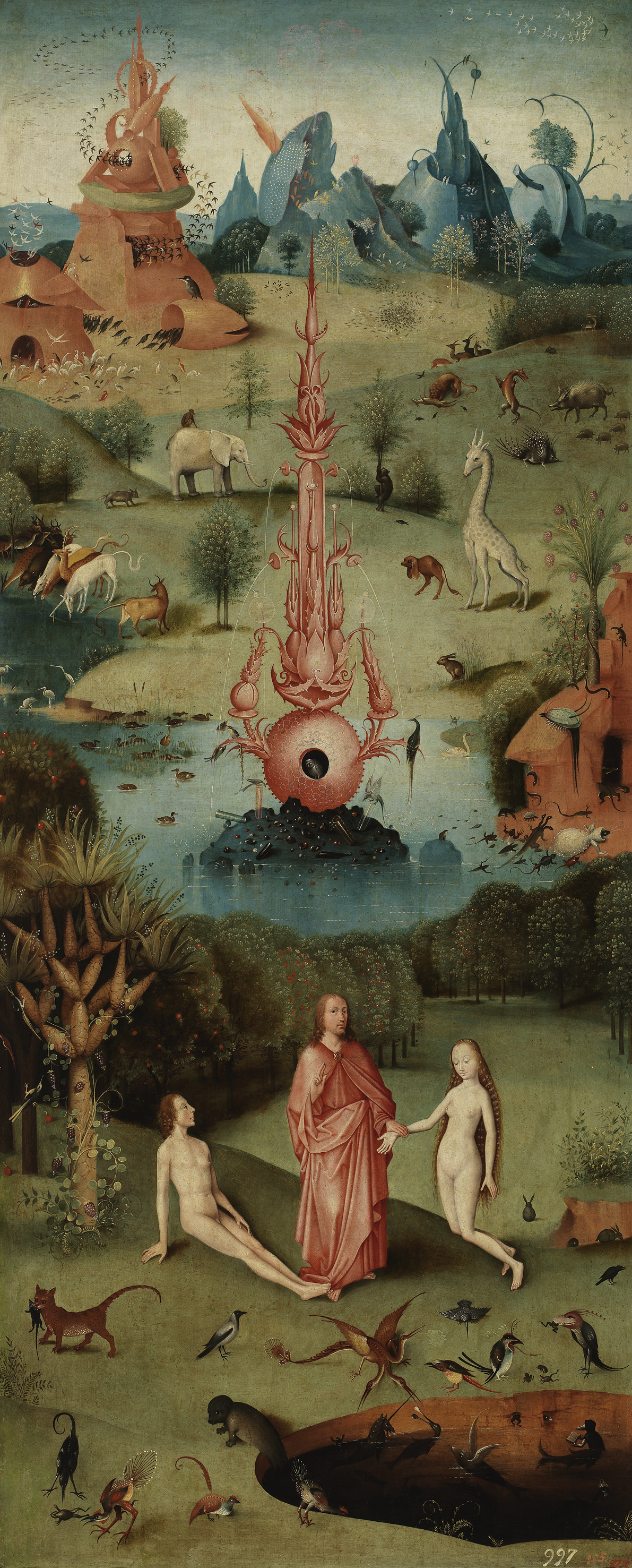
God, aided by his silent partner/audience the Divine Council, creates the Earth, either:
… as an abstract cosmic sovereign who creates animals, and then, on the sixth day, humans of both genders, or…
… as a hands-on artisan who walks around a Garden called Eden trying things and learning from his mistakes, who creates man before animals, and then woman after the animals, or…
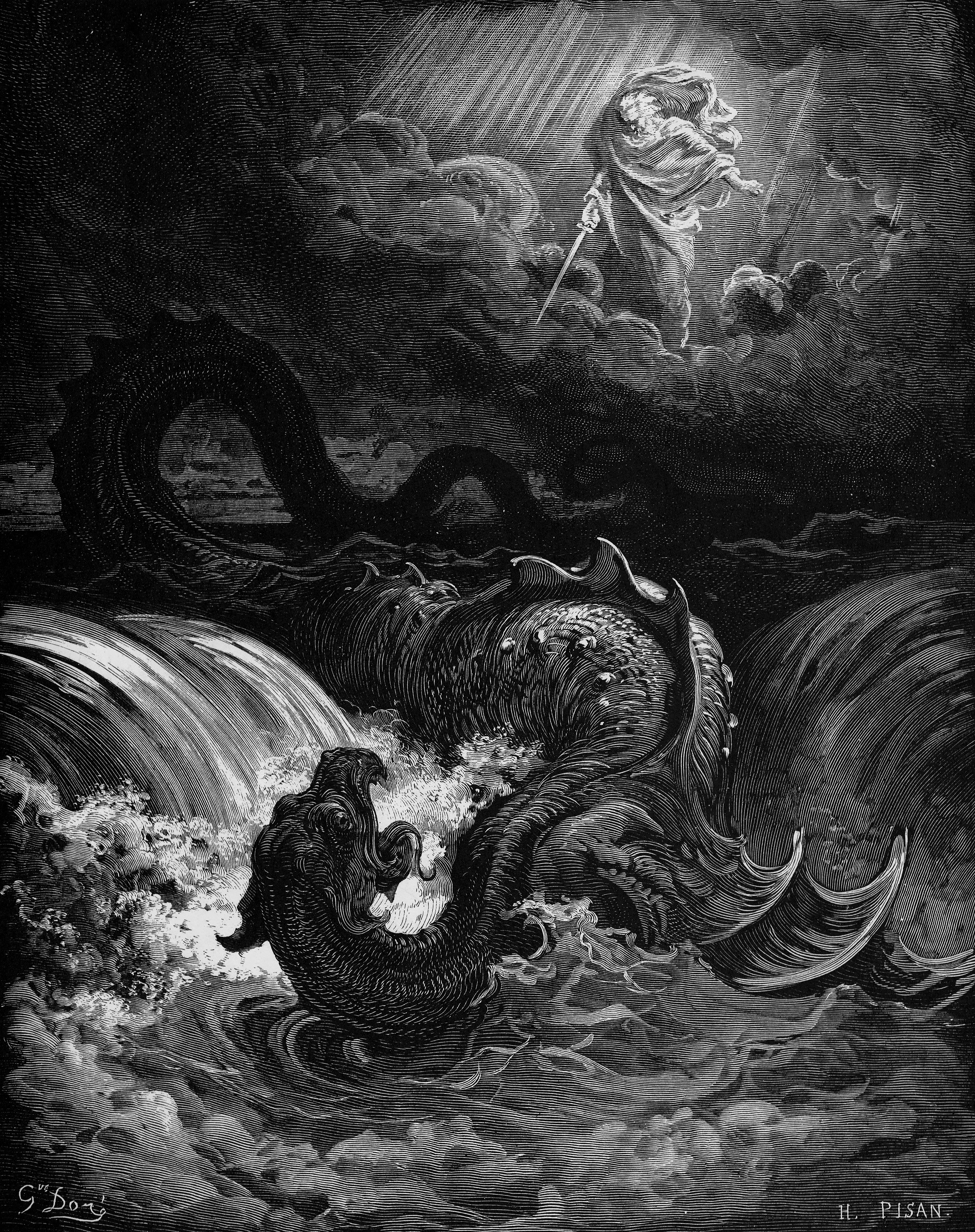
… as a head-smashing warrior who wins a war against watery Kaiju (1, 2).
God lies to Adam and Eve and then kicks them out of the Garden of Eden when it looks like there’s a risk of them becoming godlike.
Humans multiply, despite only male names in the first several generations – maybe Adam and Eve had some daughters off-screen, or maybe Seth and Cain bred with their mom, or maybe there were some extra women out there somewhere.
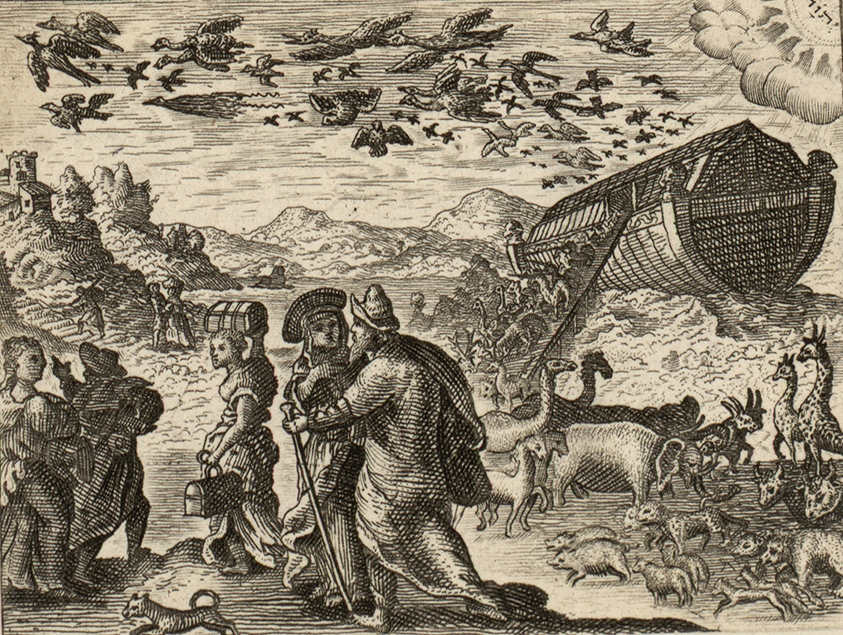
Some of the humans breed with “the children of god,” which creates giant monsters called Nephilim (they’re in Genesis, but if your Bible has the Book of Enoch, it goes into way more depth on all the terrible things they did, like inventing evil and cosmetics). God floods the Earth and shows a rainbow to promise that he’ll never do it again. (The Nephilim survive despite not being on the ark, hence the “… and also afterwards…” of Genesis 6:4, and sure enough, they return in The Book of Numbers.)
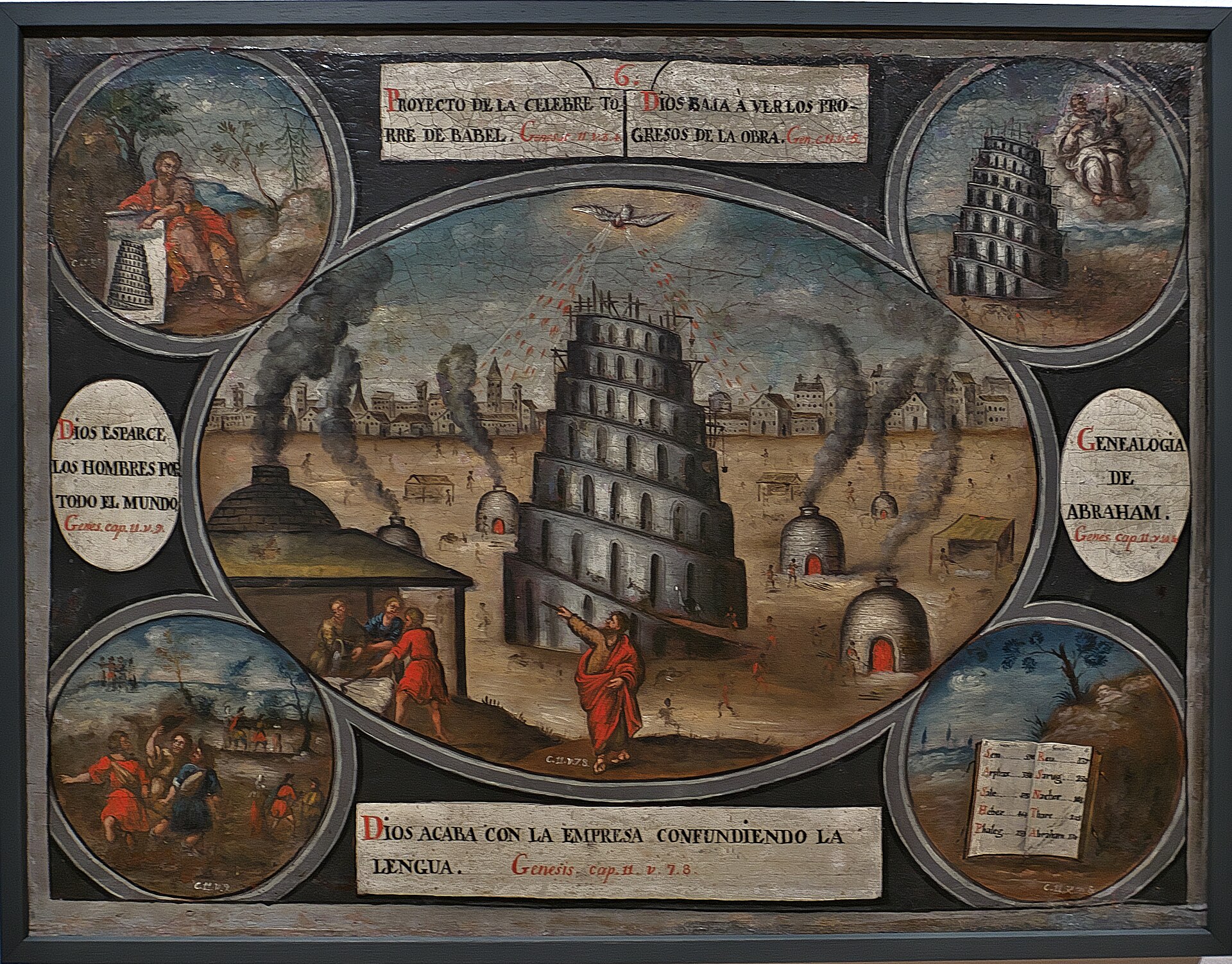
Noah’s family multiplies. They all speak the same language, which means they’re probably gonna succeed in building that tower to heaven!
But God can’t have people getting up in his business, he thought he made that clear in Eden, so, boom, a definitively plural divine council descend from the heavens to confuse the humans’ languages and ruin the construction project.
A few generations after Noah, his seventy male descendants have become the nations of the Earth, of which there are exactly seventy. (Or seventy two, depending on the version.)
Abraham and his nephew Lot are buddies and nomadic pastoralists. Lot and his family flee Sodom and Gomorrah, which are showered with fire and brimstone by the Lord for violating guest right per Genesis 19, or failure of generosity, per Ezekiel 16:49, or threatening the cross-species sexual taboo of humans and angels breeding, per Jude 1:7, but definitely not for homosexuality.
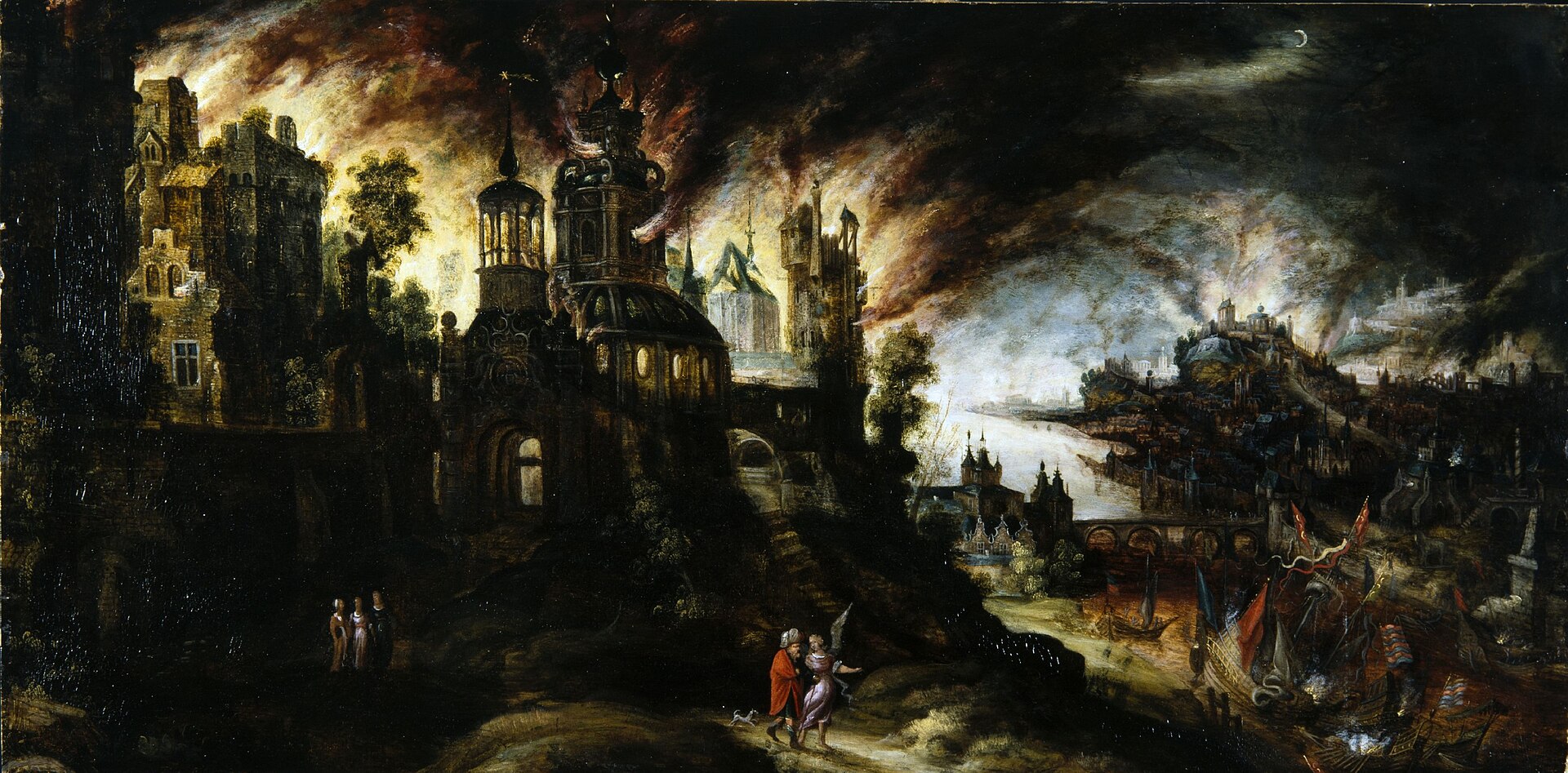
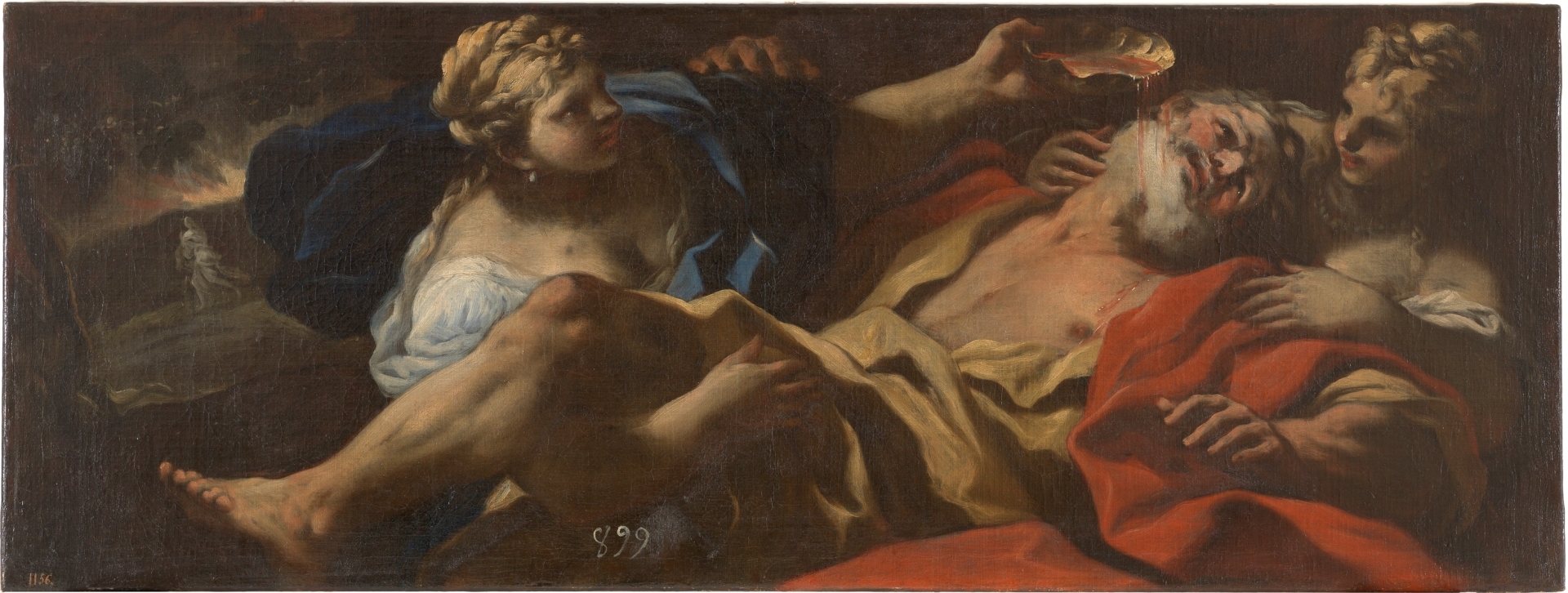
Lot’s daughters get him drunk and seduce him, and their incest babies become the nations of Moab and Ammon.
Abraham’s 65-year-old wife Sarah has trouble giving birth, a mystery that can only be supernatural. (Perhaps there’s a missing story explaining how menopause was invented later as a curse, probably for trying to get into heaven again.)
Fortunately, Sarah has a slave named Hagar. Hagar is Sarah’s property, so Hagar’s womb is also Sarah’s property. Abraham’s son from Sarah’s property’s womb is named Ishmael. Ishmael’s descendants become the Arabs. Sarah finally gets pregnant at the age of 90 and gives birth to Isaac.
At some point Abraham marries yet another woman named Keturah (second but less important wife, or concubine, depending on the text) and has several children, whom he disinherits and sends to live in the desert. One of these becomes the nation of Midian, continuing a pattern of slandering Israel and Judah’s neighbors.
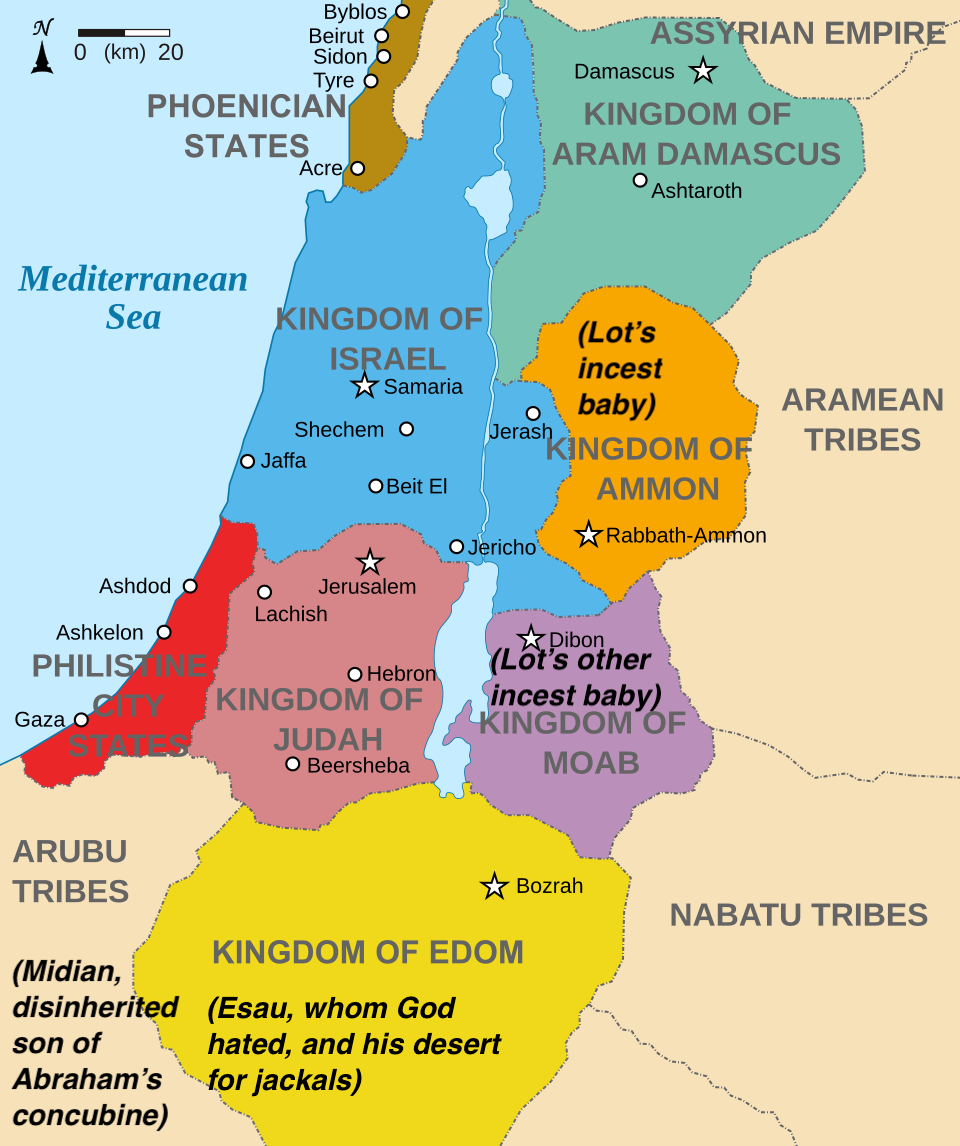
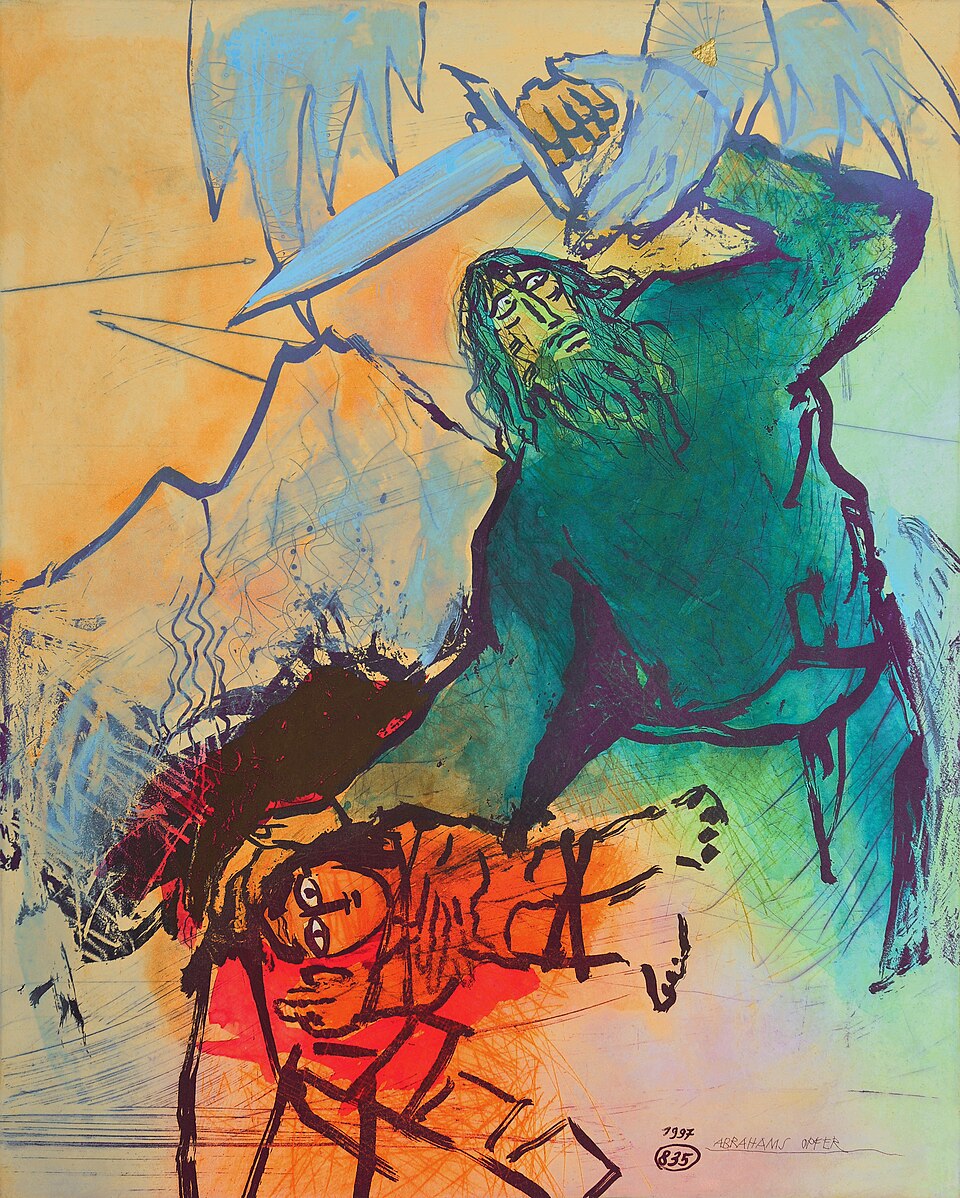
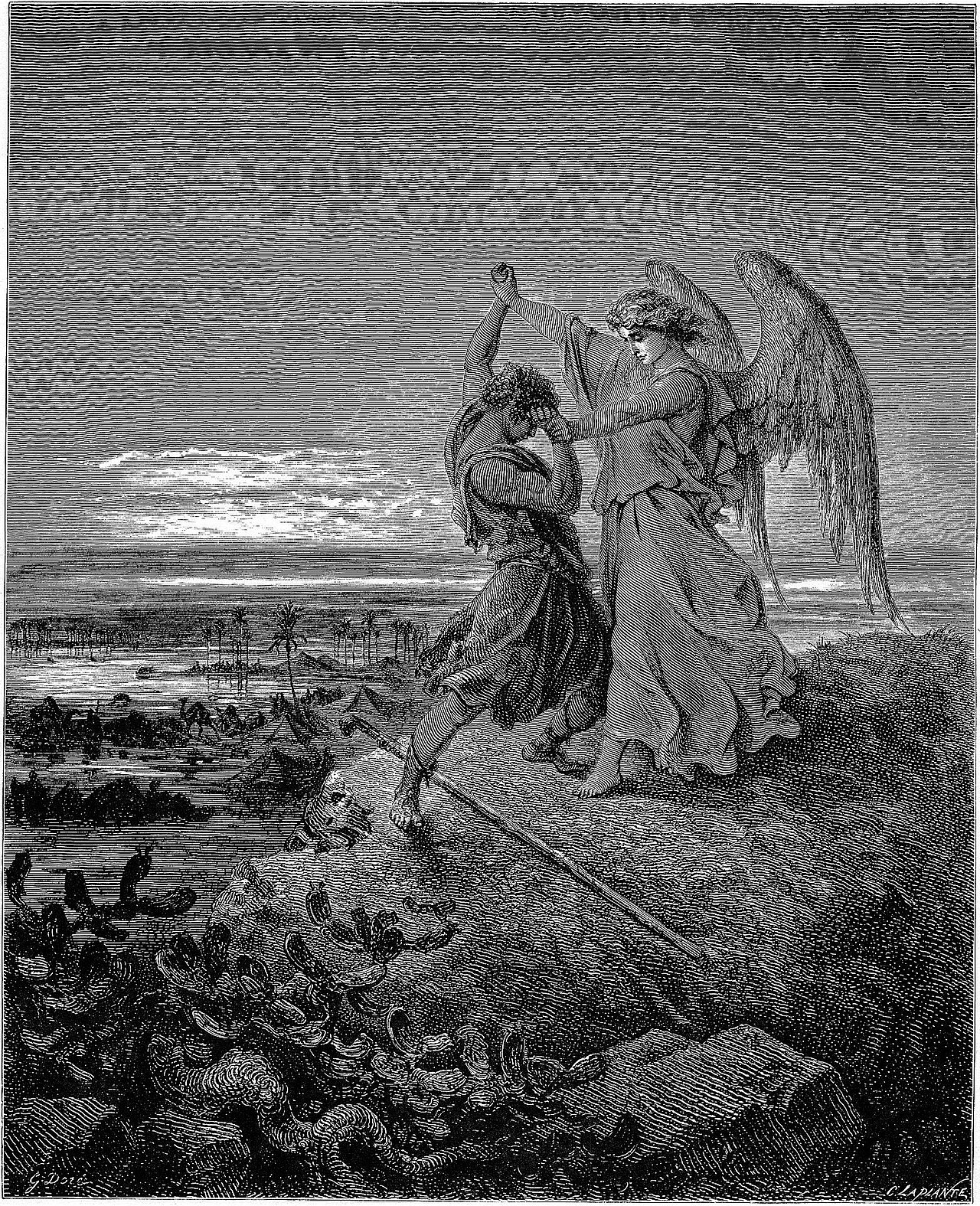
After a brief period of being a child (during which he’s offered as a sacrifice by his father) and some relatively limited adventures finding a wife, Isaac fast-forwards to being very old and has two children: Esau, who sucks (“Yet I have loved Jacob, but I have hated Esau; I have made his hill country a desolation and his heritage a desert for jackals,” says God in Malachi 1:2-3) and becomes the nation of Edom, and Jacob, who is super-dope and is also named Israel, “God Contends,” because he holds out against God himself (or an angel) in a wrestling match.
Jacob has twelve sons and one daughter (who swiftly disappears from the narrative after an upsetting story with multiple layers of sexual violence).
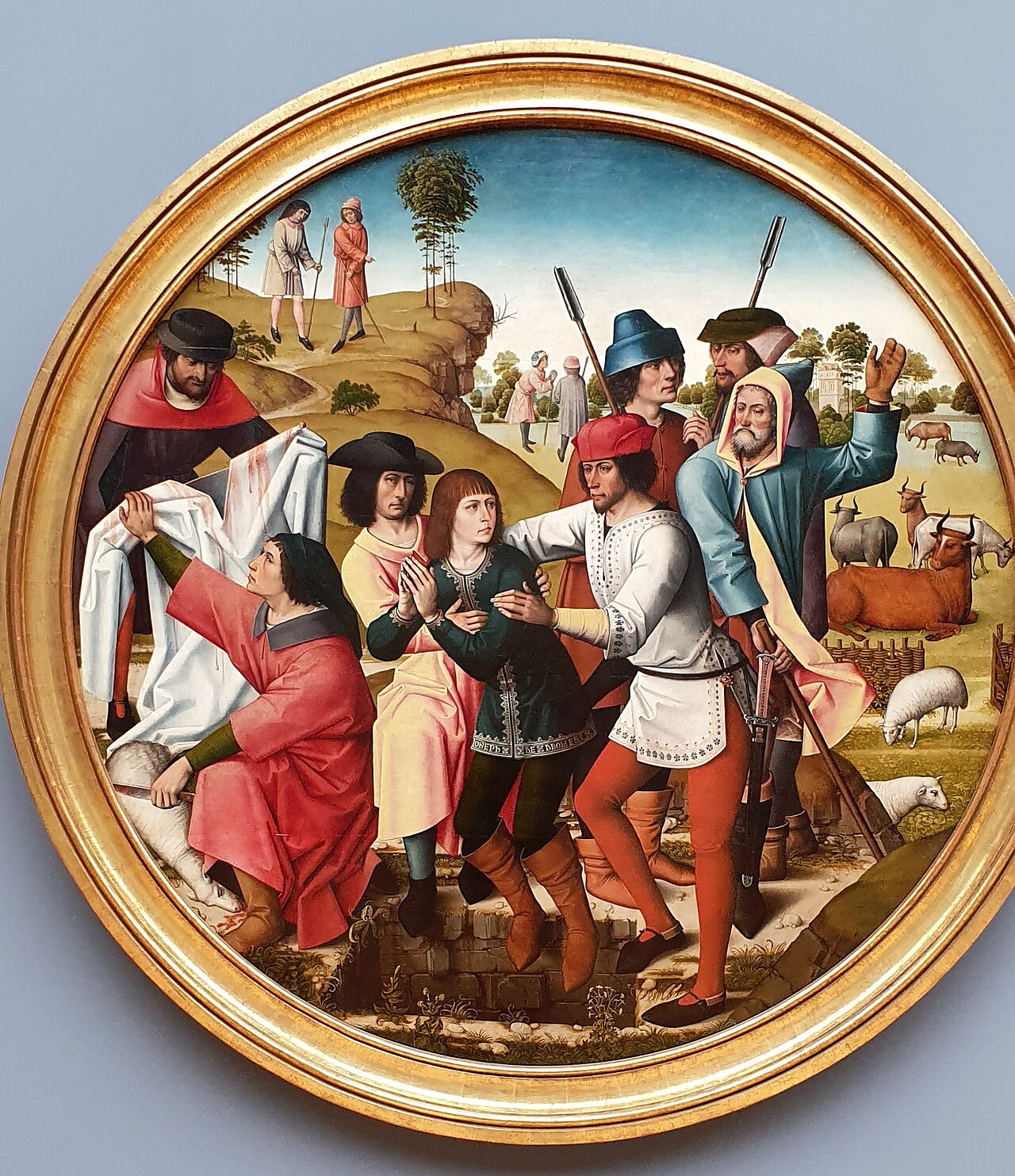
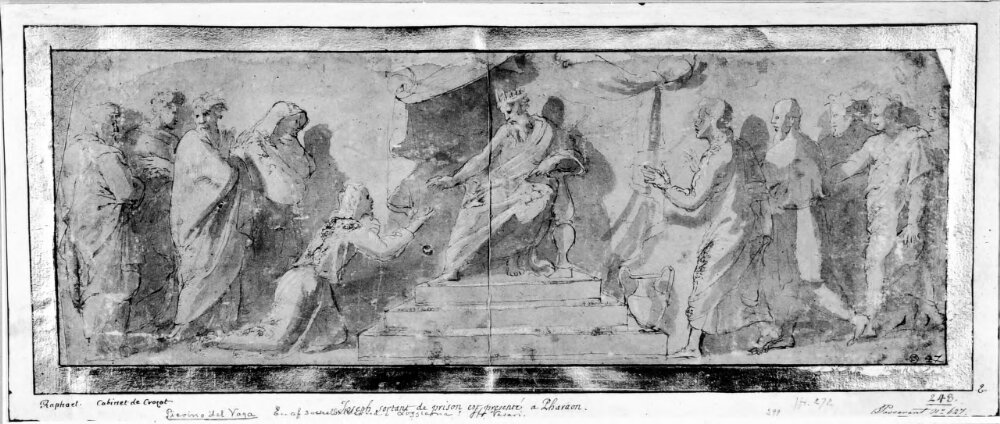
Joseph, the second to youngest, gets a really cool coat which makes his brothers jealous, so they sell him into slavery, but then he ends up becoming the Pharaoh’s favorite and negotiates a new home for his family in the powerful nation of Egypt when there’s a famine in their ancestral lands. Jacob blesses all his sons, and double-blesses Joseph because he did his family a solid. His blessing for Dan feels a little weird, though, as he compares him to a snake slithering in the grass.
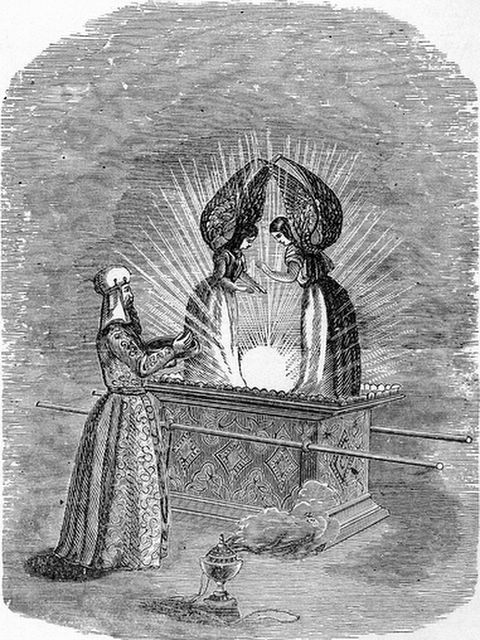
Fast forward and oh no now the Hebrews are now slaves in Egypt, so Moses leads them on an Exodus. They spend 40 years walking 250 miles, during which time God teaches them magic to create ritually pure places where he is willing to enter the gross non-heavenly world, one of which is the Ark of the Covenant, whose lid (the Mercy Seat) is the footstool at the base of his invisible throne. This allows them to march him into battle and have him shoot their enemies with beams of divine force.
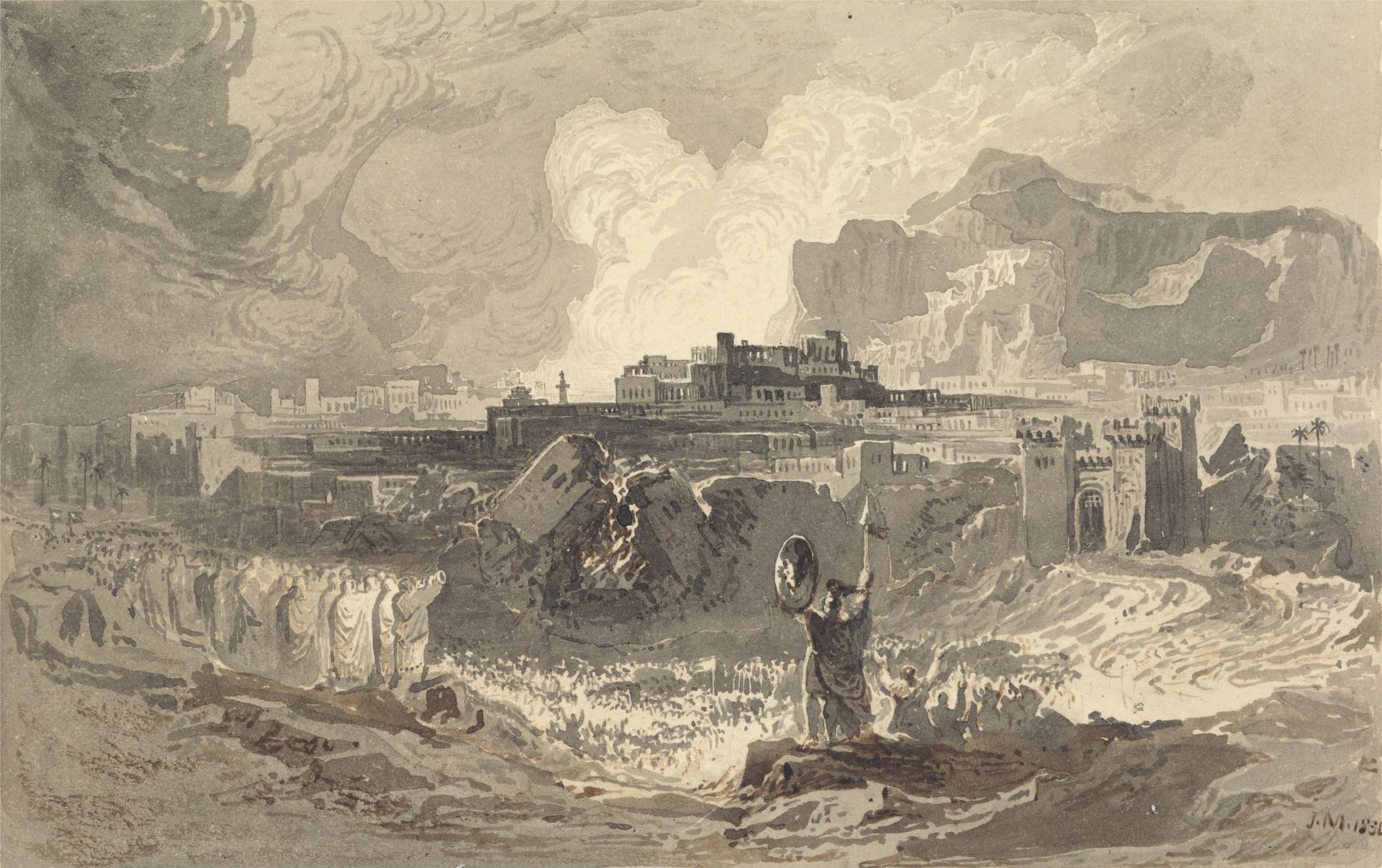
Moses loses his temper and is punished by God to not set foot in the promised land, so his apprentice Joshua leads the Israelites to conquer Canaan, where some of the people may have been Nephilim who survived the flood via unspecified means. God orders really extensive genocide. The conquering Hebrews blow horns so loudly the walls of Jericho fall down.
The Tribe of Dan gets their butts kicked and fails to take over the territory assigned to them, so they run away, rob a rich guy and steal his idols, bribe his personal Levite priest to be High Priest of their tribe, then ambush and burn down an innocent, peaceful, unsuspecting town and turn it into their capital. All the other genocides were morally superb, because God ordered them, but this is a freelance genocide, and that’s bad.
For a while, the twelve tribes are an allied confederation with twelve territories – well, the Tribe of Levi isn’t given a territory, they’re priests and live all over the place, but because Joseph did his family that huge solid back in Egypt, his sons Ephraim and Manasseh both get their own tribal allotments, so there are still twelve territories. But they’re twelve (or thirteen) tribes, not a unified nation. When they’re threatened, a divinely appointed Judge takes over and unifies the tribes to repel the threat. (One of them is Deborah, the only female Judge; she seems to have a different list of tribes than the one the rest of the Bible is working from. She also calls out the Tribe of Dan for staying home when there’s fighting to be done.)
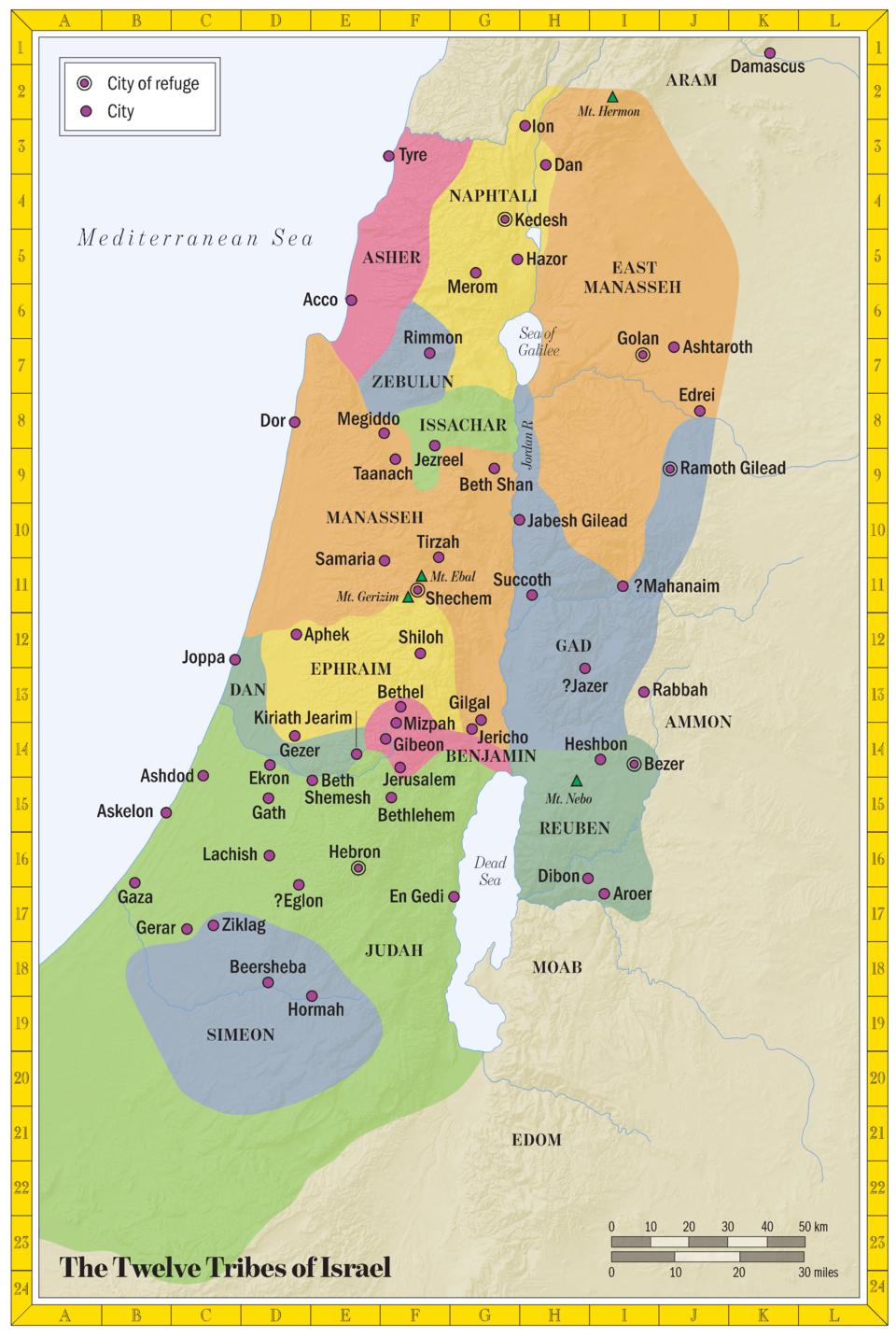
Eventually a king named Saul unifies the twelve-ish tribes into a Unified Kingdom of Israel. Unfortunately, Saul isn’t performing genocide nearly as thoroughly as God demands, so God has David replace him. David is followed by Solomon, who builds the Temple, which becomes the center of worship, storage place of the Ark, and a place where God manifests on Earth. David’s High Priest, Zadok, has become Solomon’s High Priest, and Zadok’s dynasty (the Zadokites) run the temple.
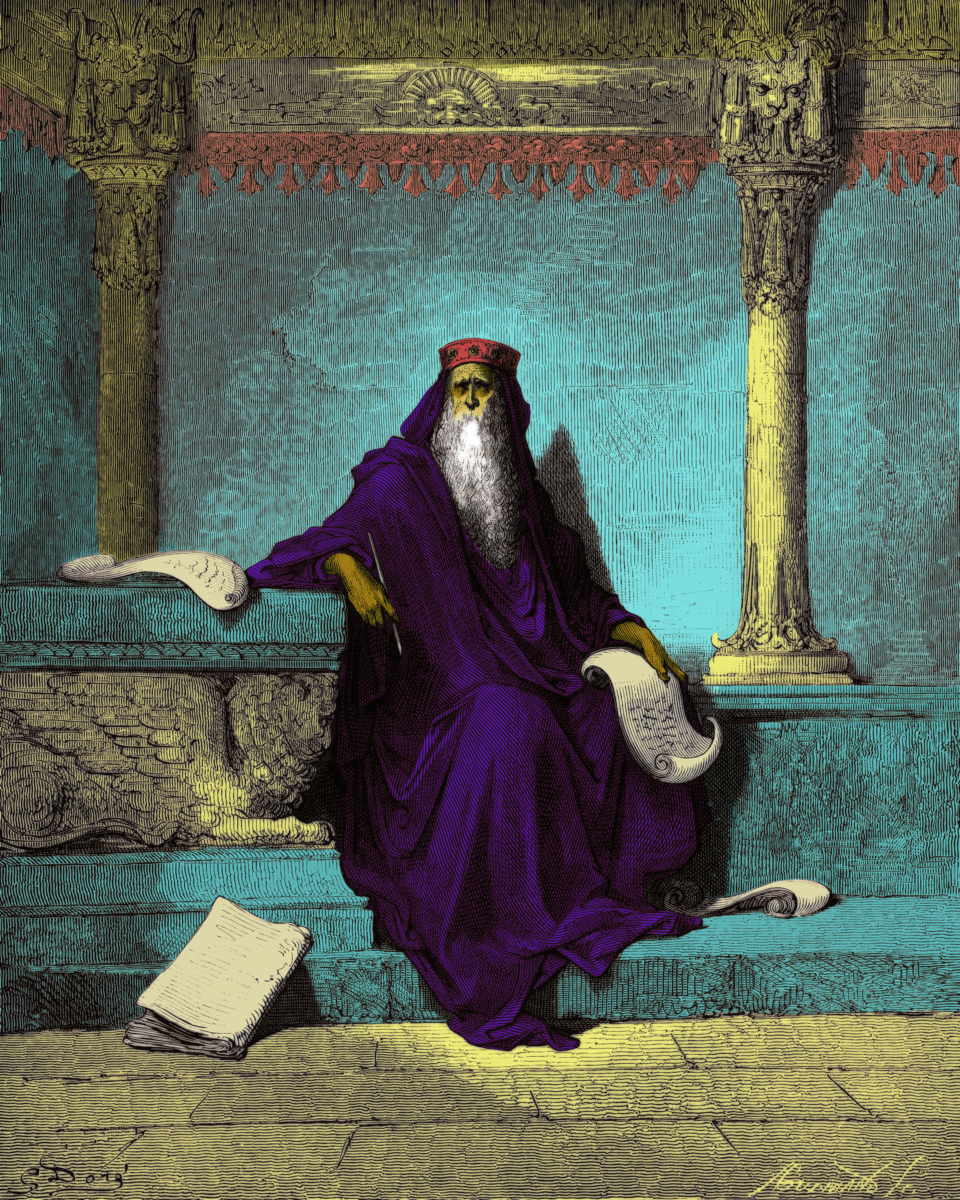
Solomon has a bunch of wives (which is fine) but is accepting of their varying religious beliefs (which is not). So the kingdom splits after his death into a northern kingdom, Israel, and a southern kingdom, Judah.
In the northern kingdom, the Tribe of Dan immediately sets up a temple hosting a Golden Calf idol.
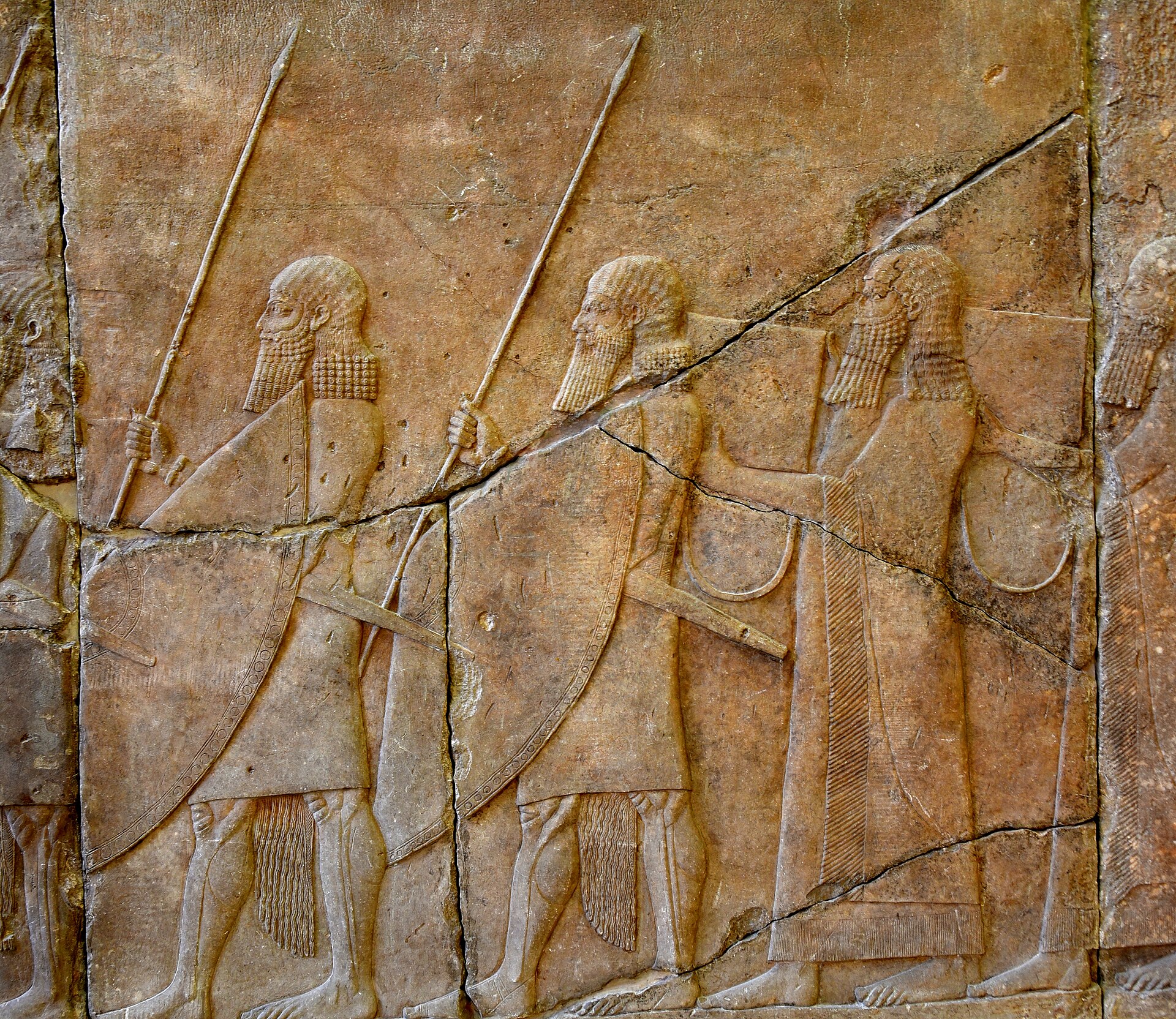
After a few hundred years, Mesopotamian Superpower Assyria starts conquering Canaan. Israel and its capital Samaria, unfortunately, have been worshipping other gods and doing Golden Calf stuff, so God allows the Assyrians to wipe them out, in an event called the Assyrian Captivity.
The Assyrians remove the natives of Israel from the land and resettle them elsewhere; these resettled Israelites are referred to as the “Lost Tribes” (often, the “Ten Lost Tribes,” though again the numbers are questionable: the Tribe of Levi was present in both kingdoms, and the tribes of Benjamin and Simeon had already been absorbed into the Tribe of Judah, which seems to leave only eight to be lost – or nine if we double-count Joseph, because he did his family that solid). That area becomes an Assyrian province called Samerina.
Israelite refugees pour into Judah.
The term Jew refers to the descendents of the Nation of Judah – both its original citizens, and the Israelite refugees they incorporate. The Lost Tribes of Israel are not Jewish, because they are not descended from the Nation of Judah.
By virtue of remaining faithful, Judah withstands the Assyrian assault, integrates the northern refugees, and survives another hundred something years until oh no, under the reign of the child king Josiah, the high priest Hilkiah discovers the Book of Deuteronomy hidden in the temple. It had been there all along, full of rules they hadn’t been following that just happen to financially benefit Hilkiah’s organization, the Zadokites! A whole bunch of reforms are kicked off.
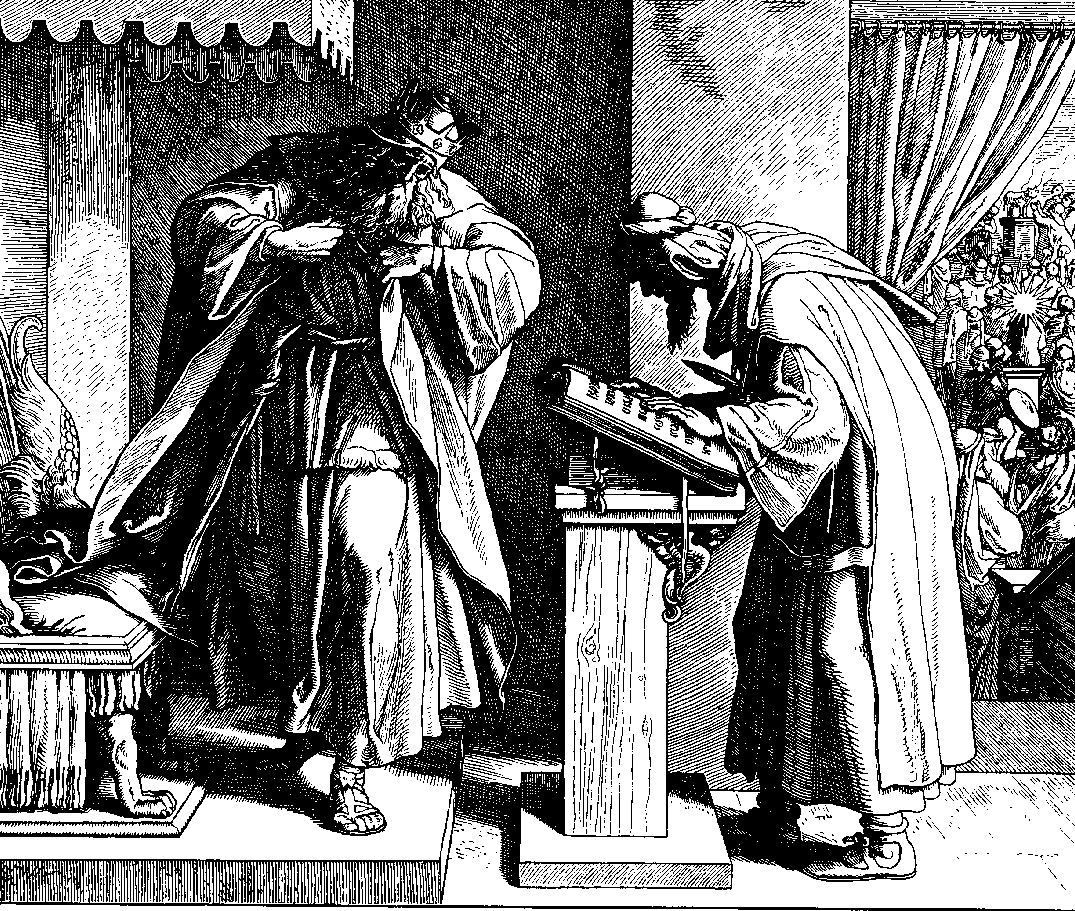
Unfortunately, barely have these reforms landed when the other Mesopotamian Superpower, Babylon, decides to conquer Judah. Although Josiah is a righteous king, his grandfather had been so terrible that it had stripped away Judah’s divine protection.
Babylon carries off the elites of Judah, and it is called: The Babylonian Exile.
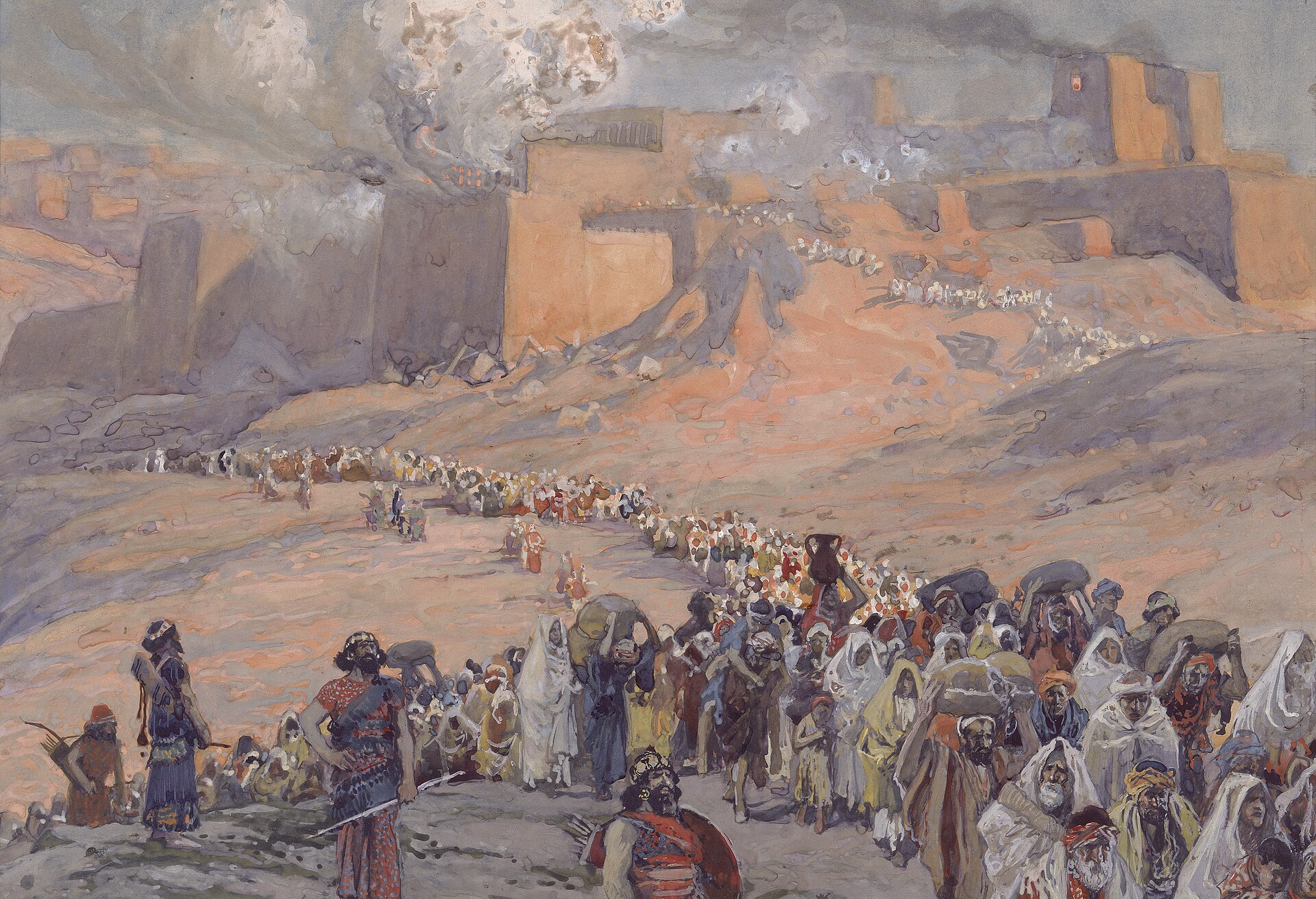
After several decades, the Persians conquer Babylon and allow the Judahites to return to their ancestral lands, now a Persian province. They find a bunch of people practicing a religion similar to but different from their own, which is definitely because those who stayed behind are apostates, not because a bunch of priests and landless aristocrats captive in a foreign land stewing in their own resentment might have changed. There are apostates left over both in the former southern kingdom (Judah) and the former northern kingdom (Israel). One of these apostate groups is living in the former capital of the former northern kingdom, Samaria, and are called Samaritans. (A Samaritan will feature in a famous parable in the New Testament.)
The returning Judahites build a Second Temple.
Ezra, a Zadokite priest (and descendant of Hilkiah, discoverer of Deuteronomy), shows up in Judah carrying the Law of Moses (maybe the Torah), and a document saying their Persian overlords delegate legal and religious authority to Ezra and his organization. There is weeping in the streets, until Ezra and his friend Nehemiah, the governor, order that everyone feast instead of being sad.
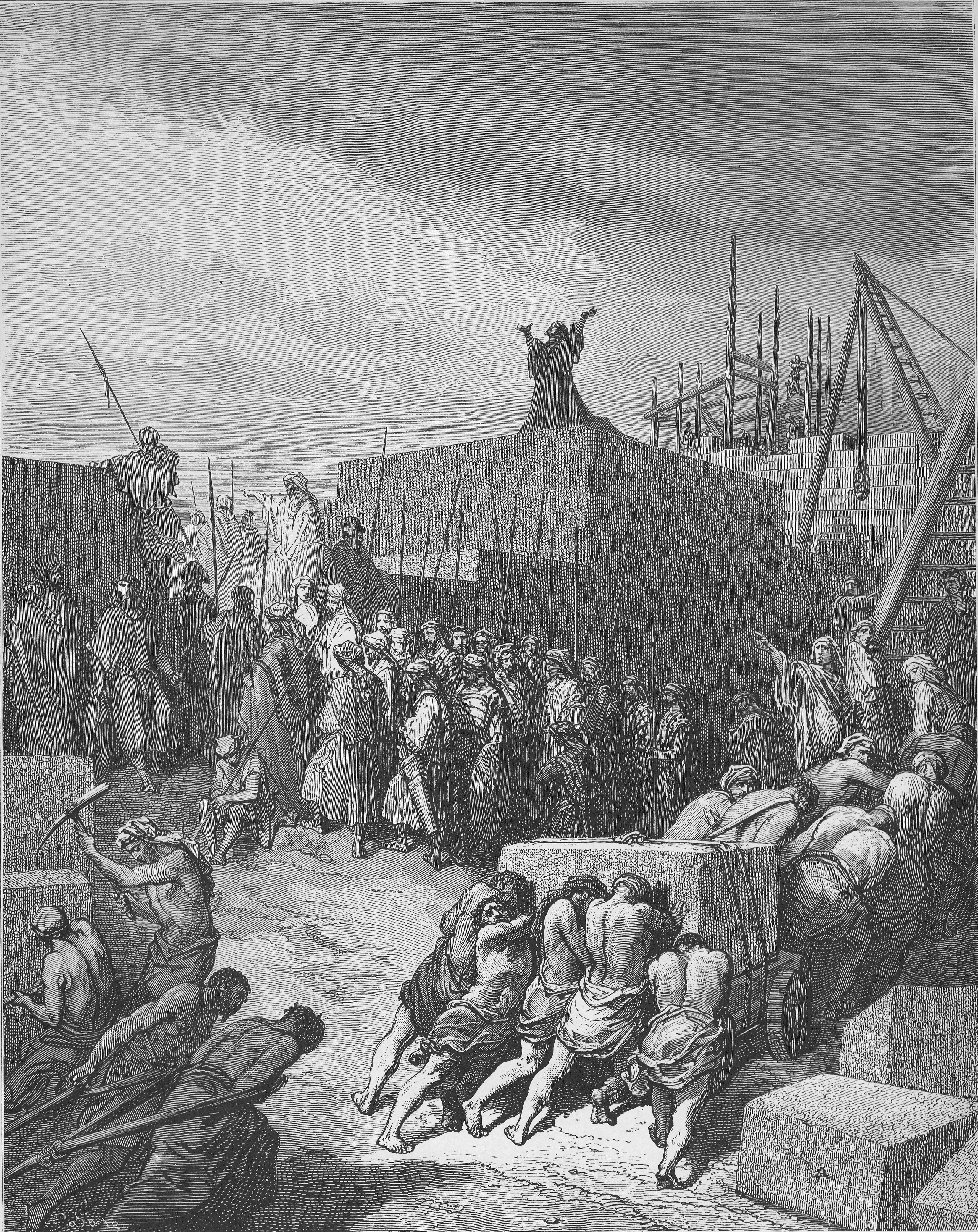
Off-screen, the Persians hand over the province to one of Alexander the Great’s successor states, which then hands it over to Rome. (Unless your Bible has the Books of the Maccabees, in which case some of this is on-screen.)
The Temple Priesthood is now an institutional elite called the Saducees (probably derived from “Zadokite,” the family who’ve been running temples since Solomon); a populist legalistic reform movement called the Pharisees is in the streets trying to bring holiness to the people. Jesus follows a similar path but disagrees with Pharisee dogma in the details. He is killed in the early phases of long-brewing unrest that will (off-screen) lead to the Jewish-Roman Wars decades later, and which will eventually result in the destruction of the Second Temple and the transition of the Jews into a people without a land.
On the island of Patmos, John the Revelator writes down a nightmare revenge fantasy about an empire exactly like Rome, but he calls it Babylon (in a callback to the Exile, and maybe to avoid Roman punishment), which is ruled by a beast whose “number” is the gematrical value of the name of the current ruler of Rome. “Babylon” is destroyed by a vengeful God, who promises salvation in equal proportions to all the tribes – which is arguably a little unfair to the southern tribes, given they should be dramatically more numerous than the ten-ish northern tribes who were destroyed by the Assyrians.
Salvation, that is, evenly distributed amongst the tribes, except that the (destroyed) Tribe of Joseph gets his standard double portion to save twice as many of his destroyed population, because of that solid he did back in Egypt, and except that the (destroyed) Tribe of Dan is straight up missing from the list – none of them are saved.
Compact?
Well, print-to-pdf says this may be 30 pages with images, but word count says it’s only 3000 words. That’s like six pages of text. I think that’s small enough to fit into your brain (with the timeline to jog your memory).
Stay tuned for the real history.