Thirty Duck-sized Horses: a month of flash fiction
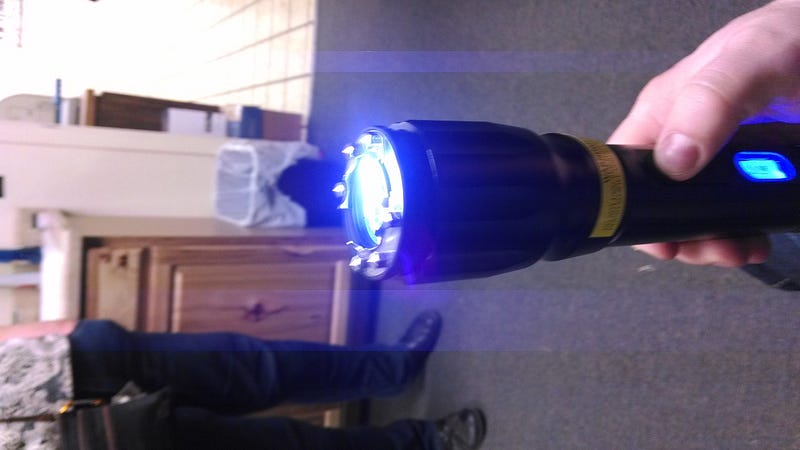
I’d just written a Horse-sized Duck…
As November 2025 drew closer, I wanted to set myself a creative goal, as I’ve done for Novembers going back to 2002. But I recently (in geologic terms) finished the first draft of what I’d thought was a novel (but which turned out to be a trilogy of novels of about 400 pages each), which needs a lot of editing, and I didn’t want to dig that hole any deeper.
Having just spent 24 years writing one very long story, I was fascinated by the idea of writing lots of very short stories. So I committed to writing 30 pieces of flash fiction during the calendar month of November.
Flash fiction is a story of 1000 words or less, usually 1–4 pages. I figured by writing lots of little stories I would:
- Practice finding the story hiding behind an idea.
- Practice building structures of setup, arc, and satisfying conclusion.
- Remind myself that I was broader than this one huge thing I’d been struggling with for decades.
- Be able to share, get feedback, and improve stories on a much tighter loop.
I went out and read some books; of the several I read, I recommend:
- Going Short: an Invitation to Flash Fiction, by Nancy Stohlman
- Down We Go and Other Strange Tales: An Anthology of Weird Flash Fiction (Minute Fiction)
- Where Darkness Lives & Other Monstrous Tales: An Anthology of Fantasy, Horror and Speculative Flash Fiction (Minute Fiction Book 2)
- Only Animals, by Chelsea Sutton
The Stohlman book is a non-fiction guide to writing flash fiction, in the style of flash fiction: each chapter is about a page long.
Reading a flash fiction collection was interesting; sometimes, a story wouldn’t work for me at all, but it would be over fast and I’d be on to the next one. And sometimes when they hit, they hit really hard, because the story was so concentrated.
Stohlman turned out to have also invented a National Novel Writing Month alternative for Flash Fiction, which she called Flashnano, which had the same terms as the challenge I’d made up for myself. I loosely connected myself to it, subscribing to her Substack for daily prompts.
The Needless Technical Project
As I have discussed elsewhere, I write my fiction in a text editor in a custom format I made up, and keep it under source control, as if I had spent a good chunk of my life as a software engineer.
I decided that each flash story would get its own directory, with one file for the story itself, one file for notes, and then, to get extra creativity kicking, I’d throw in one illustration for each story. (But of course I neither have any freehand art skills, nor do I have the legal rights to any existing art, so I just used photos I’ve already taken.)
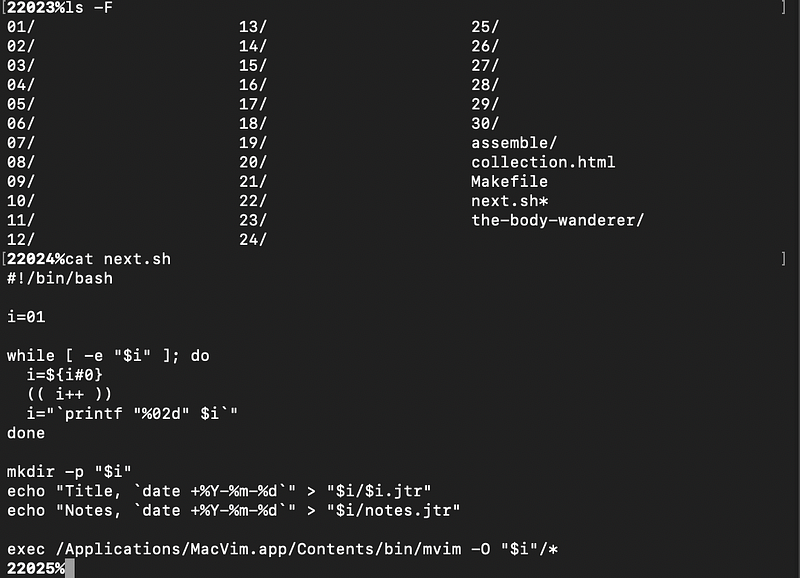
I wrote a little script called “next.sh”, which I would run as soon as I was ready to start a new story; it would look to see what the number of the last story was and create a subdirectory for the next numbered story, with boilerplate for the new story and new notes file.
I wrote some code to create a single story collection document by rendering all the sub-stories, plus a title page, table of contents, etc.
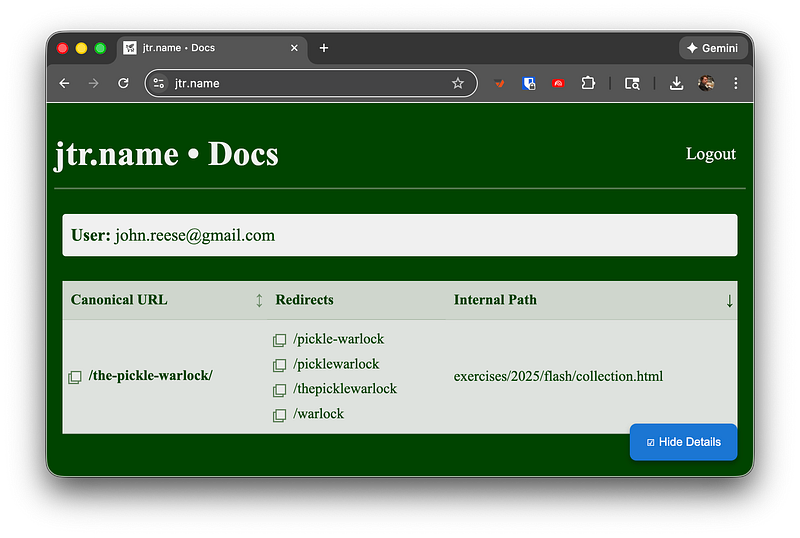
Then (actually, I did most of this after November) I wandered off and coded up a 5kloc content-management system in Go, which runs on Google Cloud Run, automatically rebuilds and redeploys whenever I change any story content, authenticates users via OAuth (“sign in with Google”), and has per-document access controls and mechanisms to request, approve, deny, and share access. Which is a lot of words for “a website where I can permit specific people to read my stories.”
(You may recognize those as features that already exist in, say, Google Docs. While I can point at some advantages, such as that I have readable/verbally transmissible URLs instead of Google Docs’s mainframe-vomit-style URLs, I mostly just made this thing because it made me happy.)
Finding the stories
November started. Flashnano emailed out a prompt every day, which was fine, but (a) often the prompts weren’t enough to get me started, and (b) sometimes I want to write more than one story in a day, because I know from experience I’m not going to get to work every single day of the month (birthday celebrations, Thanksgiving, proctored Portuguese exams).
For example, a useful prompt for me was “14 years ago…” which immediately reminded me of a personal story I could adapt into fiction. A less useful prompt was “write a story where something turns into something else,” because that’s sort of every story, or “write a 19-word story,” which, fun challenge, but it’s all structure, no imagination.
But it’s good that this was hard, because finding the story in an idea was one of the key things I wanted to practice.
Prompts that connected to some emotional memory were much quicker to turn into stories. Sometimes that memory would come on its own, sometimes I’d have to brainstorm. And often that wasn’t enough.
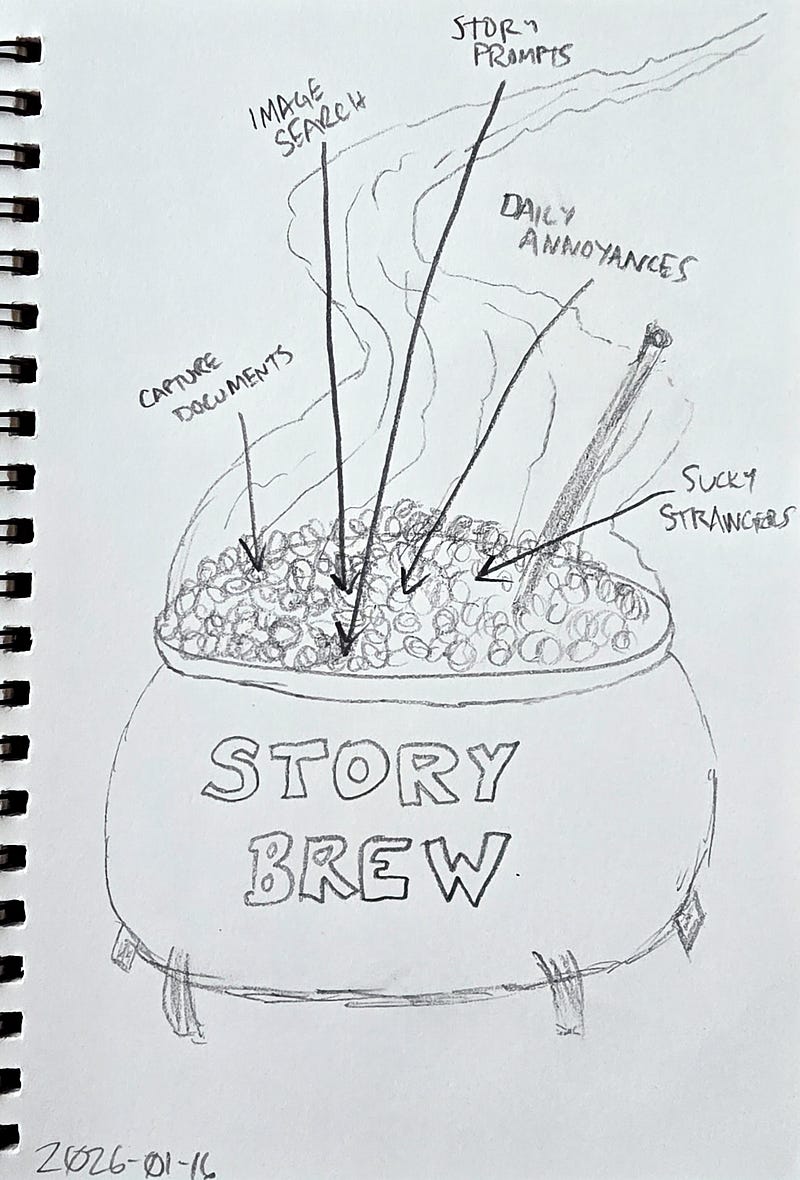
I’ve been keeping a dream journal for decades. I wrote a little script that broke the dream journal up into separate files, one per dream, and then presented me with a random one. I could hit a key to churn through a random sequence of dreams.
If I was out past my prompts or got a prompt that didn’t come alive, churning through my dreams might make something click. Dreams are your subconscious working through issues that preoccupy you, so they’re connected to emotional memories.
Sometimes I’d do a Google Image Search, or search through the photos I’ve taken with camera phones over the last decades, looking for connections that would spark an emotion.
Initially the story finding process was so intuitive I almost found it frustrating. I had an idea, but no story. Brainstorm, brainstorm, churn, churn, no story, churn, churn, brainstorm, whomp: I have a story and I just have to write it. What changed? What was I subconsciously recognizing when my brain flipped from “no story” to “there’s the story?”
I’m sure that’s a topic I’ll continue learning about forever, but I figured out it didn’t feel like a story till I had two things:
- A scenario or character that felt interesting to live in.
- A twist or punchline that felt non-obvious and satisfying.
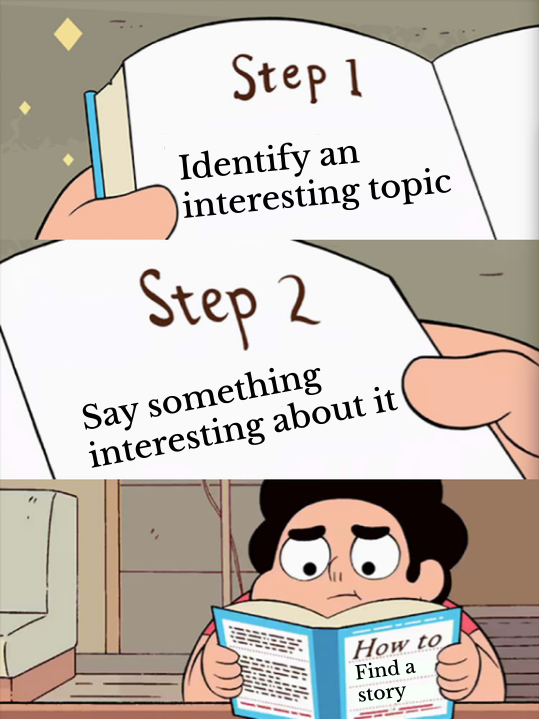
What is “interesting,” and what is “satisfying?” A lot more to explore there, but now I had a basic schema as to what constituted enough of a story to start writing.
I started looking all over for ideas. I walked around the neighborhood and looked at leftover Halloween decorations. I took note of annoying interactions with strangers, so I could avenge myself on fictionalized versions of them. I captured topics that were preoccupying me and tried to figure out how to explain them to somebody else.
Sometimes the story I wanted to write was in a genre I felt less confident in, so I’d go out and read a couple stories from that genre.
I have lots of “capture documents” where I write down things that catch my attention, even if I don’t know what I’m going to do with them: funny names, observations from overthinking a sitcom plot, nonsense words that got stuck in my head. (The dream journal is a capture document.)
Names
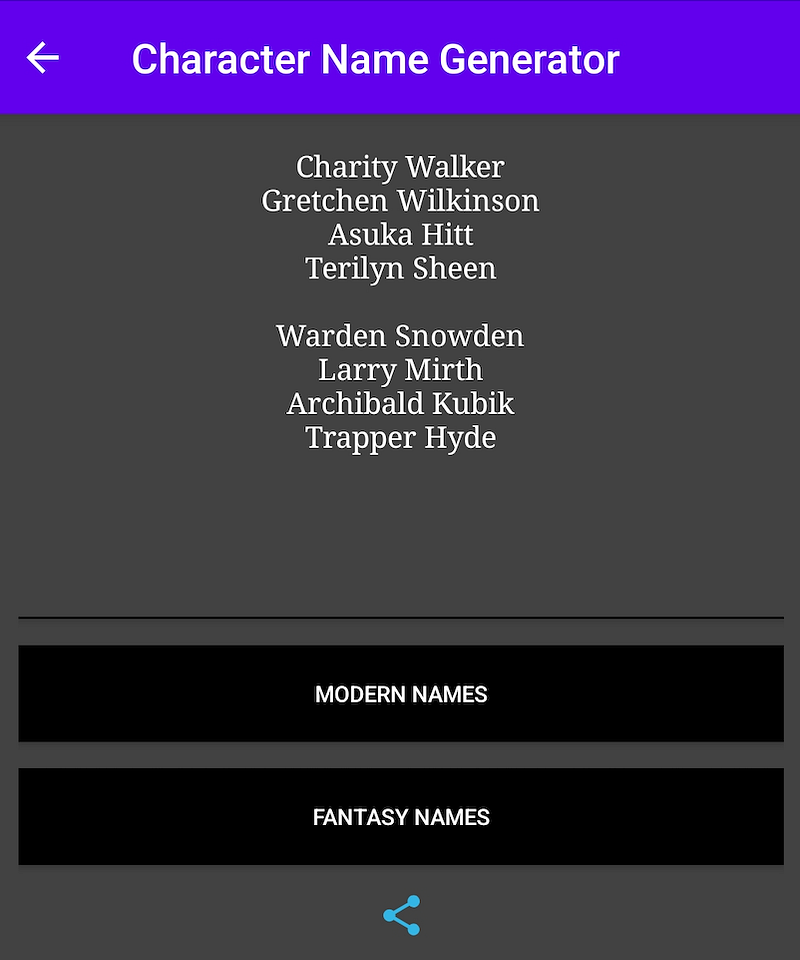
In a novel, you can spend some time finding the perfect name for your characters. But if you’re writing thirty stories in thirty days, each with multiple characters, you’re going to need some assistance.
I have an app on my phone — I won’t bother to give you the name, as it doesn’t appear to exist on the Play Store anymore, but there are lots of websites that can do the same thing: churn out randomly generated names, based on existing sources like census data or baby name books. Every day I’d sit down, figure out my story, churn up four or five names that might fit the story, and then use one or two of them. I don’t feel too bad about this — real names aren’t exactly random, but they’re not allocated to us based on what kind of adventures we’re going to have.
In one story, I thought it would be fun to have two related entities of different genders, with the name of one being the other name in reverse. I downloaded some publicly available data sets with lists of male and female names, and wrote a script to look for reversed matches. It turns out there aren’t that many good pairs, but I found one that was OK and ran with it. Middling experiment, but now I have some data files I can do other stuff with. Maybe.
What did I learn?
Feedback is trickling in, and I’m learning about which stories mean something to readers. So far every one has been a surprise.
Being able to identify the elements that expand an idea into a story — that I need both an interesting scenario, and something interesting to do with it — feels obvious when I say it like that, but sometimes the best insights do. It feels like something I can use.
I tried a lot of different genres, some of which I wouldn’t usually touch.
It was good. It was also exhausting.
The stories
If you’re interested in helping me become a better storyteller, http://jtr.name/warlock (you’ll request access, I’ll approve) — and when you’re done, there’s a link in the lower right to give me feedback.
If I’m doing it right, this is the worst these stories will ever be.